
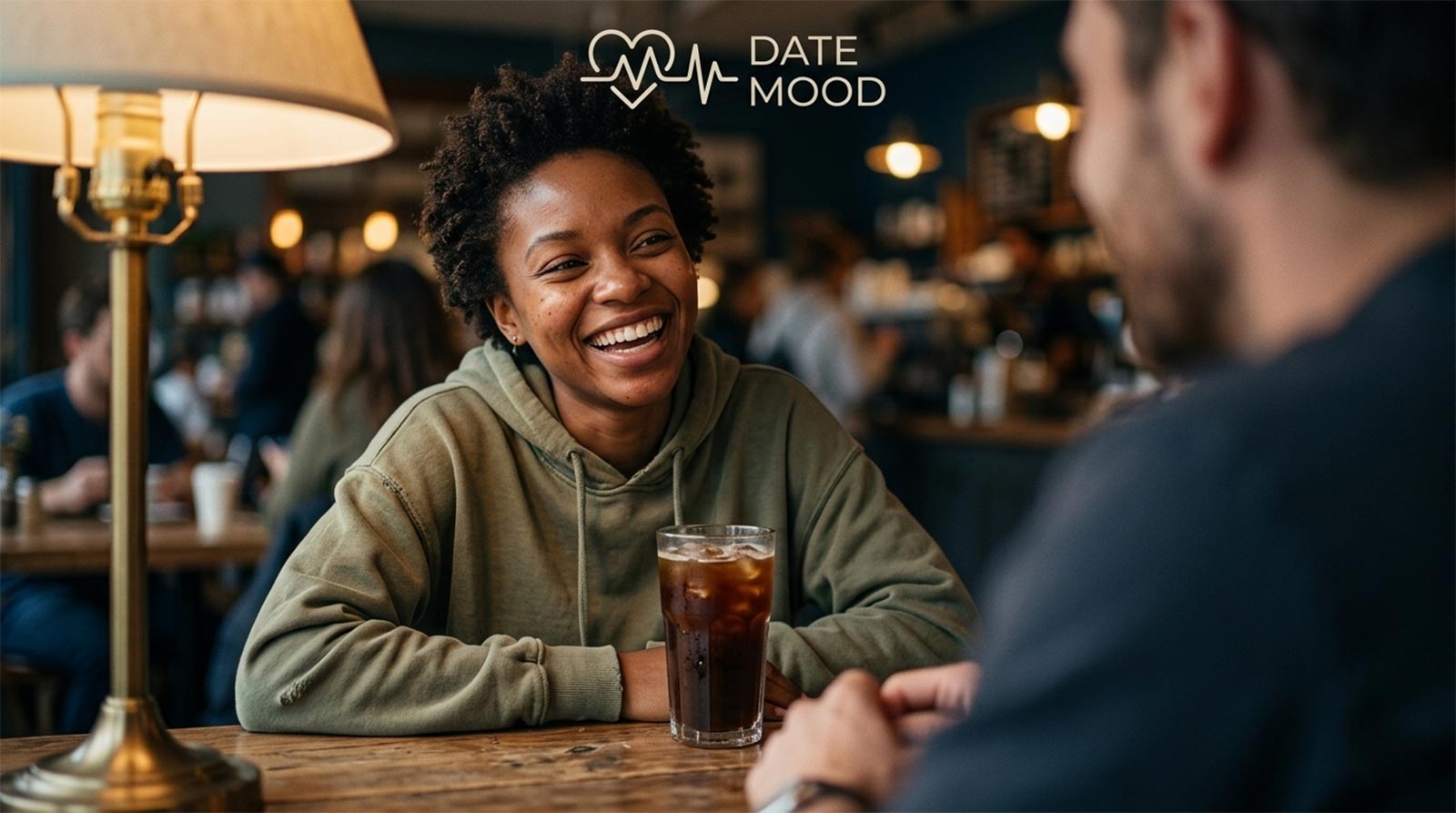
Think back to your last “first date.”
You probably spent an hour picking an outfit that said “I’m effortless but also highly successful,” rehearsed your “fun facts” like a TED Talk, and practiced a laugh that was exactly three decibels quieter than your real, snorting-when-you’re-actually-amused laugh. We’ve all been there — performing the “Best Version™” of ourselves, hoping that if we play the part well enough, we’ll get the callback.
But here’s the problem: when you audition for a relationship, you end up with a job, not a partner.
In 2026, we are finally seeing a collective “enough is enough” moment. It’s called truecasting dating, and it’s the radical act of showing up to a first date exactly as you are — unpolished, unfiltered, and unapologetically real. It’s the antidote to the curated perfection of the last decade, and it’s changing the game for anyone tired of the “dating burnout” cycle.
What is Truecasting Dating?
The term “Truecasting” is a play on “broadcasting” your true self right from the jump. Instead of the slow reveal — where you wait until date five to mention you hate hiking or that you’re actually quite messy — you lay it all out on date one.
According to recent data, nearly one in four singles are now adopting this “love me or leave me” approach. It’s a movement backed by a growing desire for efficiency and emotional depth. We’re no longer interested in the “representative” people send to dates; we want the person who actually lives in the house.
Why We’re Finally Taking Off the Mask
For years, the advice was to “keep it light” and “don’t be too much.” But let’s be honest: that hasn’t exactly led to a golden age of stable relationships. It’s led to a lot of people realizing three months in that they aren’t actually compatible with the person they’ve been seeing.
Truecasting dating flips the script. It recognizes that if someone is going to be “turned off” by your realness, it’s much better for that to happen over a twenty-minute coffee than after six weeks of emotional investment.
This trend is a direct response to the “vibe check” culture of previous years. We realized that a vibe can be faked, but values and genuine personality traits cannot. By embracing this approach, we’re moving away from the “resume date” (where we list our accomplishments) and toward the “soul date” (where we share our actual lives).
The Psychology of Radical Authenticity
There is a profound psychological relief that comes with truecasting dating. When you don’t have to “perform,” your nervous system stays regulated. You aren’t constantly scanning the other person for approval because you’ve already decided that their approval isn’t the goal — connection is.

If you’ve been dating someone in therapy, you’ve likely seen this in action. People who do the inner work tend to Truecast naturally because they’ve learned that a connection built on a facade is a house of cards. They know that vulnerability isn’t a weakness; it’s a filter. It filters out the people who aren’t ready for your level of depth and invites in those who are.
How to Practice Truecasting Without it Feeling Like an “Emotional Dump”
There’s a fine line between being authentic and being a “trauma dumper,” and truecasting dating is firmly about the former. It’s not about airing every grievance or dark secret within ten minutes of meeting. It’s about consistency between your internal and external worlds.
Here is how to do it the Sara Jenkins way:
- Dress for your real life: If you’re a “jeans and a tee” person, don’t show up in a three-piece suit. Show them the person they’ll see on a Tuesday night.
- Share your “Unpopular Opinions” early: Do you hate the city you live in? Are you strictly “no kids”? Mention it. It’s not a mood-killer; it’s a compatibility-saver.
- Stop the “Polite Agreement”: If they suggest a movie genre you hate, say so! It’s okay to have a personality. It’s actually quite attractive.
- Lead with your values: Talk about what actually matters to you, whether that’s your career, your community, or your weird obsession with vintage samplers.
When you stop trying to be the “perfect date,” you actually become a great date because you’re present. You aren’t in your head calculating your next move; you’re in the moment, reacting to a real human being.
Sara’s Side Note: In a world where we’ve been told we need “liquid courage” to be likable, 2026 is proving exactly the opposite. If you’re tired of the “hangxiety” and ready to see your date (and yourself) with total clarity, you aren’t alone — 67% of the new generation is already making the pivot. Dive into our guide on Sober Dating 2026 to discover why the best chemistry doesn’t need a chemical filter.
Why Truecasting Saves Your Sanity (and Your Schedule)
One of the biggest drivers of dating fatigue is the “wasted time” factor. We spend weeks texting, have a “good” first date, and then realize by date three that there was zero long-term potential.
Truecasting acts as an accelerated filter. It’s a bit like a first date reset: how to overcome anxiety — it takes the pressure off the outcome. When your goal is simply to show up as yourself, you can’t “fail” a date. If they don’t like you, it simply means they aren’t your person. The “no” becomes just as valuable as the “yes” because it returns your time to you.
It’s the ultimate form of intentionality. You’re saying, “My time is valuable, and your time is valuable. Let’s see if our real selves actually fit together.”
The “Truecasting” Conversation Starters
If you’re ready to try this but don’t know where to start, try shifting your questions. Instead of the standard “What do you do for work?”, try things that reveal character:
- “What’s something you’re surprisingly passionate about?”
- “What does a ‘perfectly recharge’ day look like for you?”
- “What’s a boundary you’ve recently learned to set?”
These questions invite the other person to Truecast with you. It breaks the “interview” mold and moves you into the territory of genuine connection. It’s much more effective than worrying about the 24-hour rule: what to text after a first date because when you’ve had a “truecast” encounter, you both already know where you stand.
Sara’s Takeaway
I know that showing up without your “armor” feels terrifying. We’ve been conditioned to believe that we need to be “more” or “different” to be lovable. But here is the truth I’ve learned from thousands of conversations: The parts of you that you’re trying to hide are usually the parts someone else is going to fall in love with.
Truecasting dating isn’t about being perfect; it’s about being perceivable. It’s about giving someone the chance to see the real you, right from the start. So, next time you’re getting ready for a date, take a deep breath, leave the “Best Version” at home, and just bring yourself. I promise, you’re more than enough.